Bring your curiosity. We’ll make room for the rest.
PDF & WordAudio notesYouTube
THE ARBRENOTE WAY
Your learning, taking root
A little seedling
Clear notes
A new leaf
✦
arbrenote
01 / Your learning material
What are we learning today?
Drop something dry. Discover a little aha.
Drop files hereWord · PDF · YouTube · Audio notes
Create clear notes
02 / Read the essentials
KEY IDEAS, ALL IN ONE PLACE
Neuroplasticity: your brain’s road crew
Learning can change how brain connections work. Your brain keeps adapting.
01Experience can reshape connections between neurons.
02Practice can strengthen pathways used for a skill.
03Learning takes repeated practice, with time to rest.
Make flashcards
03 / Make it stick01 / 03
A LITTLE CONCEPT CHALLENGE
Choose one
You practise a tricky piano passage. Why can it get easier?
AThe brain adapts the connections used for that skill
BThe fingers store the tune without the brain
COne attempt permanently locks in every connection
DAll your neurons start doing the same job
A gentle nudge
Got it
The brain adapts the connections used for that skill
Neuroplasticity is the brain’s ability to adapt its connections with experience. Repeated practice can make a particular skill more efficient.
Your brain is a road crew, not a USB stick. Practise a piano passage and the crew improves that route: fewer potholes, smoother traffic. The whole city doesn’t turn into a piano!
A new leaf
Keep for reviewGot it
A new idea remembered. +1 leaf
A PDF. A lecture. A spark of curiosity.
Illustrative demo · growth shown at an accelerated pace
Drop a video link. Turn available captions into something you can return to.
Neuroplasticity: your brain’s road crewExperience can reshape connections between neurons.Practice can strengthen pathways used for a skill.Learning takes repeated practice, with time to rest.
Learning can change how brain connections work. Your brain keeps adapting.
01Experience can reshape connections between neurons.
02Practice can strengthen pathways used for a skill.
03Learning takes repeated practice, with time to rest.
Make flashcards
03 / Make it stick01 / 03
A LITTLE CONCEPT CHALLENGE
Choose one
You practise a tricky piano passage. Why can it get easier?
AThe brain adapts the connections used for that skill
BThe fingers store the tune without the brain
COne attempt permanently locks in every connection
DAll your neurons start doing the same job
A gentle nudge
Got it
The brain adapts the connections used for that skill
Neuroplasticity is the brain’s ability to adapt its connections with experience. Repeated practice can make a particular skill more efficient.
Your brain is a road crew, not a USB stick. Practise a piano passage and the crew improves that route: fewer potholes, smoother traffic. The whole city doesn’t turn into a piano!
A new leaf
Keep for reviewGot it
A new idea remembered. +1 leaf
A PDF. A lecture. A spark of curiosity.
Illustrative demo · growth shown at an accelerated pace
TRY A LITTLE AHA
A card you can actually play with.
Choose, turn, understand. Swipe left to come back to an idea. Swipe right when it clicks.
Keep for reviewGot it
A sample card. Your own learning stays in your workspace.
A LITTLE CONCEPT CHALLENGE
Choose one
You practise a tricky piano passage. Why can it get easier?
Correct answer
Correct answer · A
The brain adapts the connections used for that skill
Neuroplasticity is the brain’s ability to adapt its connections with experience. Repeated practice can make a particular skill more efficient.
Your brain is a road crew, not a USB stick. Practise a piano passage and the crew improves that route: fewer potholes, smoother traffic. The whole city doesn’t turn into a piano!
A new leaf
CHAPTER 02 / GROW SOMETHING THAT STAYS
A little more knowing. A little more growing.
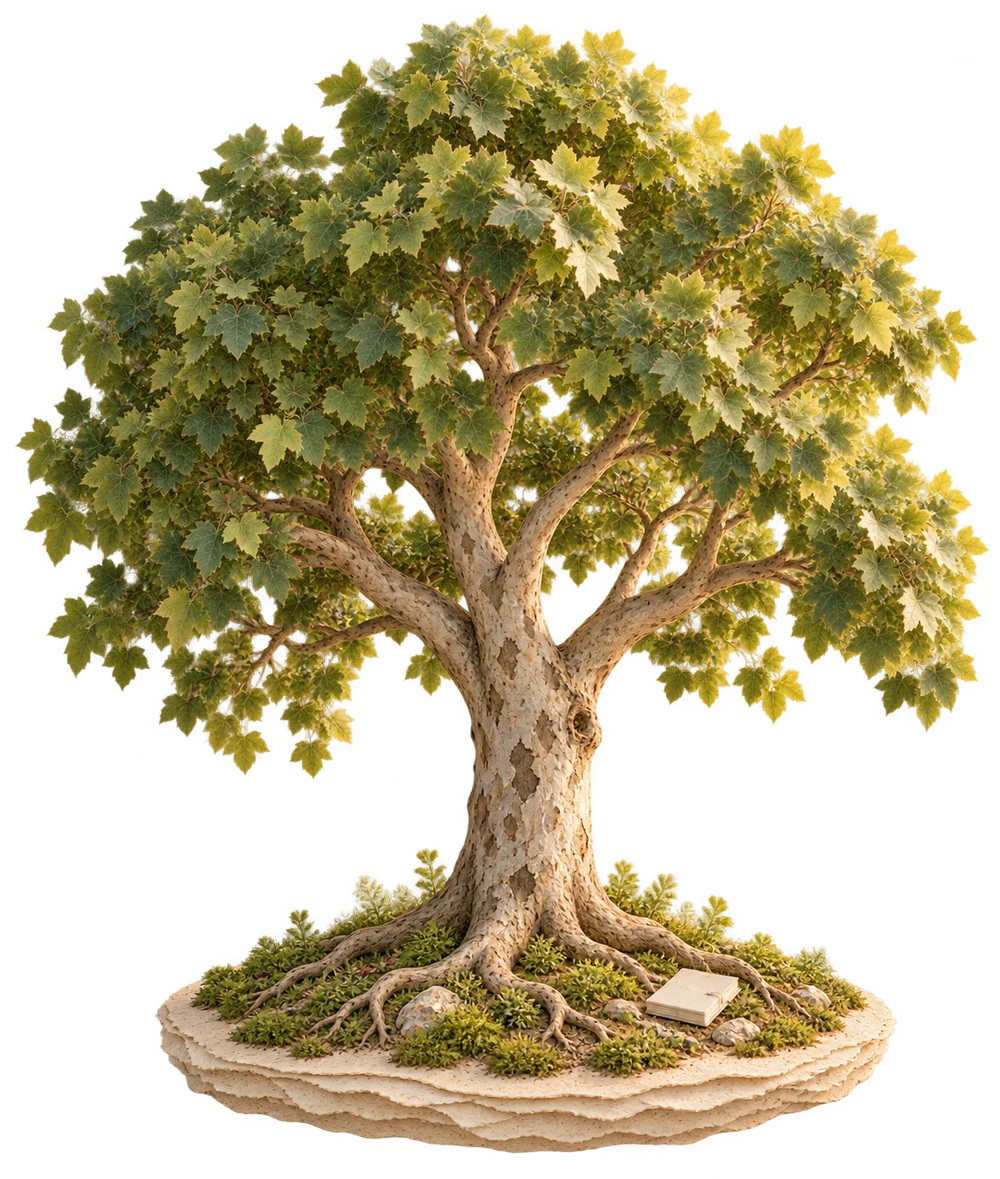
A concept remembered lights up a leaf. Chapters become branches. With time, your small sapling becomes a tree—and then a garden that is entirely yours.
The homepage demo grows fast. Your real tree grows through steady learning.
A FEW THINGS YOU MIGHT BE WONDERING
Good questions. Clear answers.
What can I bring into arbrenote?
PDFs, Word documents (.docx and .doc), text, YouTube links, and recorded or uploaded audio. YouTube summaries depend on captions being available.
Do I have to make flashcards straight away?
Your summary comes first. Read it, keep it by subject, and choose to make flashcards whenever you’re ready.
Do I need an account to try it?
You can start exploring before you register. After the fourth flashcard, we’ll ask you to sign in so your learning and little tree can be saved. Shared written summaries can be read without an account.
What happens to cards I haven’t remembered?
Swipe them left to keep them for review. Come back to them when you’re ready, across later sessions.
Can I study in another language?
The interface is available in English, French and Chinese. You can keep original terms alongside explanations, and pronunciation is available for language-learning content.
THERE’S ROOM FOR YOUR NEXT IDEA.
Start small. Grow something wonderful.
One note. One card. One thing that finally makes sense.
 arbrenote
 ✦A little seedling